This post contains affiliate links. If you buy through them, we may earn a commission at no extra cost to you. See our Affiliate Disclosure page for details.
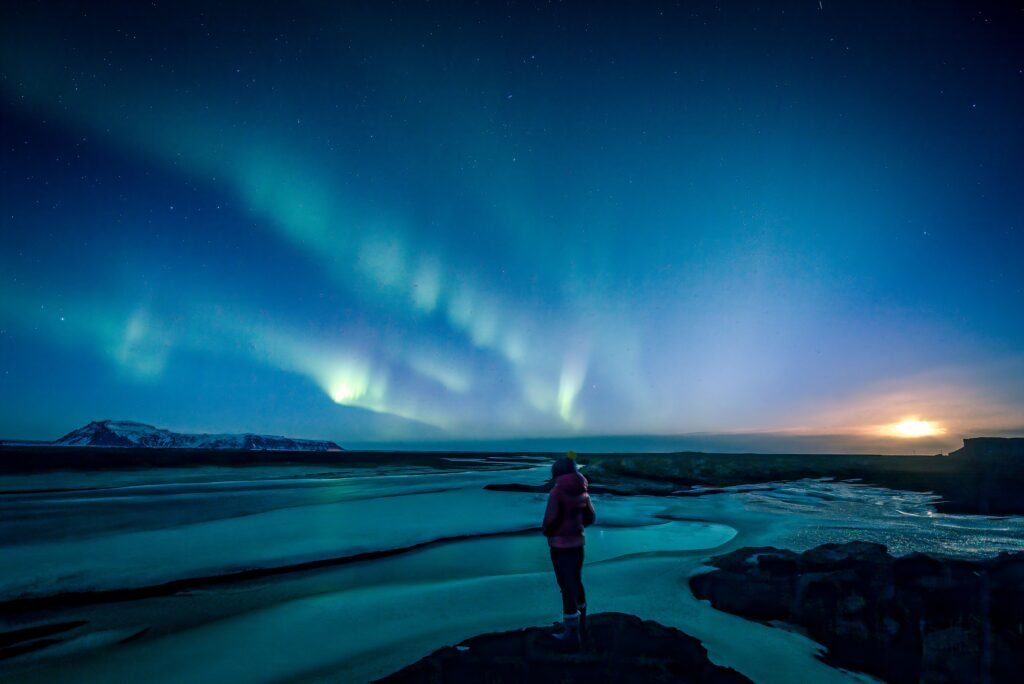
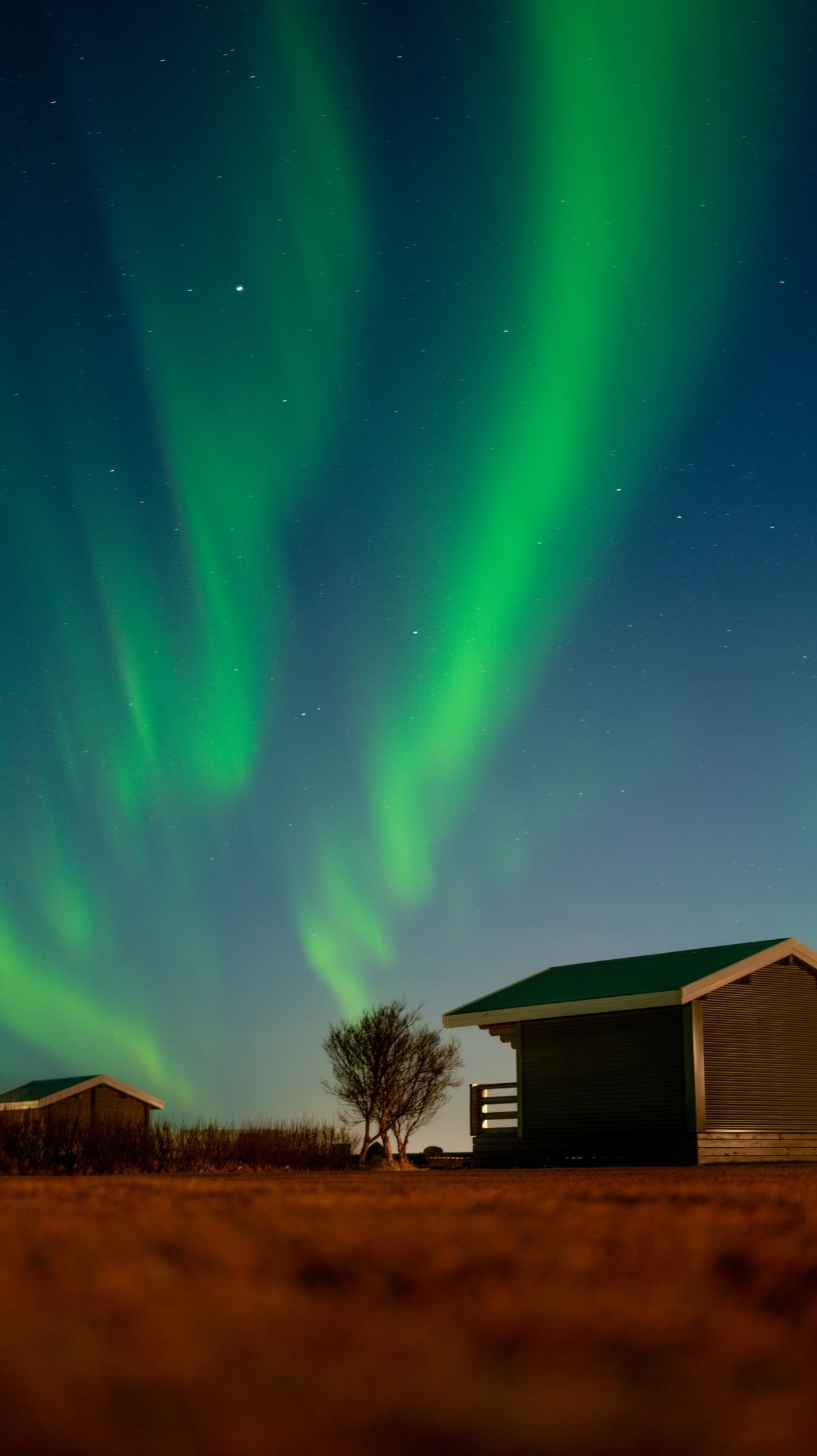
The northern lights are the kind of thing people plan entire trips around, and Iceland is one of the best places on earth to see them. It sits just below the Arctic Circle, it has very little light pollution once you leave the towns, and its landscapes give you waterfalls, glaciers, and black beaches as a backdrop. No other aurora destination photographs quite like it.
But the lights are not guaranteed. They depend on dark skies, clear weather, and solar activity lining up on the same night. This guide covers when to go, the best viewing spots, and how to give yourself the best possible chance of seeing them.
Table of Contents
When to see the northern lights in Iceland
The aurora season in Iceland runs from September to April. The lights are actually active year round, but you need darkness to see them, and Iceland’s summer nights never get dark enough.
Within the season, timing matters:
- September to October and February to March are the sweet spots. The nights are dark, the weather is milder than midwinter, and the roads are easier to drive.
- December to February has the longest, darkest nights, which means the most viewing hours. But it also has the worst weather, with storms that can cloud out the sky for days.
- November and January sit in between: very dark, but with unpredictable weather.
2026 is shaping up to be an especially good year. Solar activity is running high, which means stronger and more frequent displays. If an aurora trip has been on your list, this is the season to do it.
How many nights do you need?
Plan at least three to four nights, all dedicated to aurora hunting. The lights depend on clear skies, and Iceland’s weather changes fast. One cloudy night means nothing if the next one clears. Most people who miss the lights simply did not stay long enough.
Stay in one base rather than moving every night. You want to be ready to go out on short notice when the sky clears.
The best places to see the northern lights in Iceland
The two rules are simple: get away from city lights, and get under clear skies. These are the spots that deliver both.
Thingvellir National Park
About 45 minutes from Reykjavik, Thingvellir is the easiest dark sky escape from the capital. It is a national park, so there is almost no artificial light, and the rift valley landscape makes a dramatic foreground. This is where most Reykjavik based aurora tours head first.
Jökulsárlón Glacier Lagoon
On the south coast, about five hours from Reykjavik, the glacier lagoon is the most photographed aurora location in Iceland. Icebergs drift in the lagoon while the lights dance above them, and the nearby black sand beach is scattered with ice that glows blue in the dark. Worth the drive if you have the nights to spare.
Vik and Reynisfjara
The village of Vik on the south coast sits under some of the darkest skies in the country. The black sand beach at Reynisfjara, with its basalt columns and sea stacks, gives you foreground interest that few aurora photos can match. Stay overnight in Vik rather than day tripping from Reykjavik.
Kirkjufell
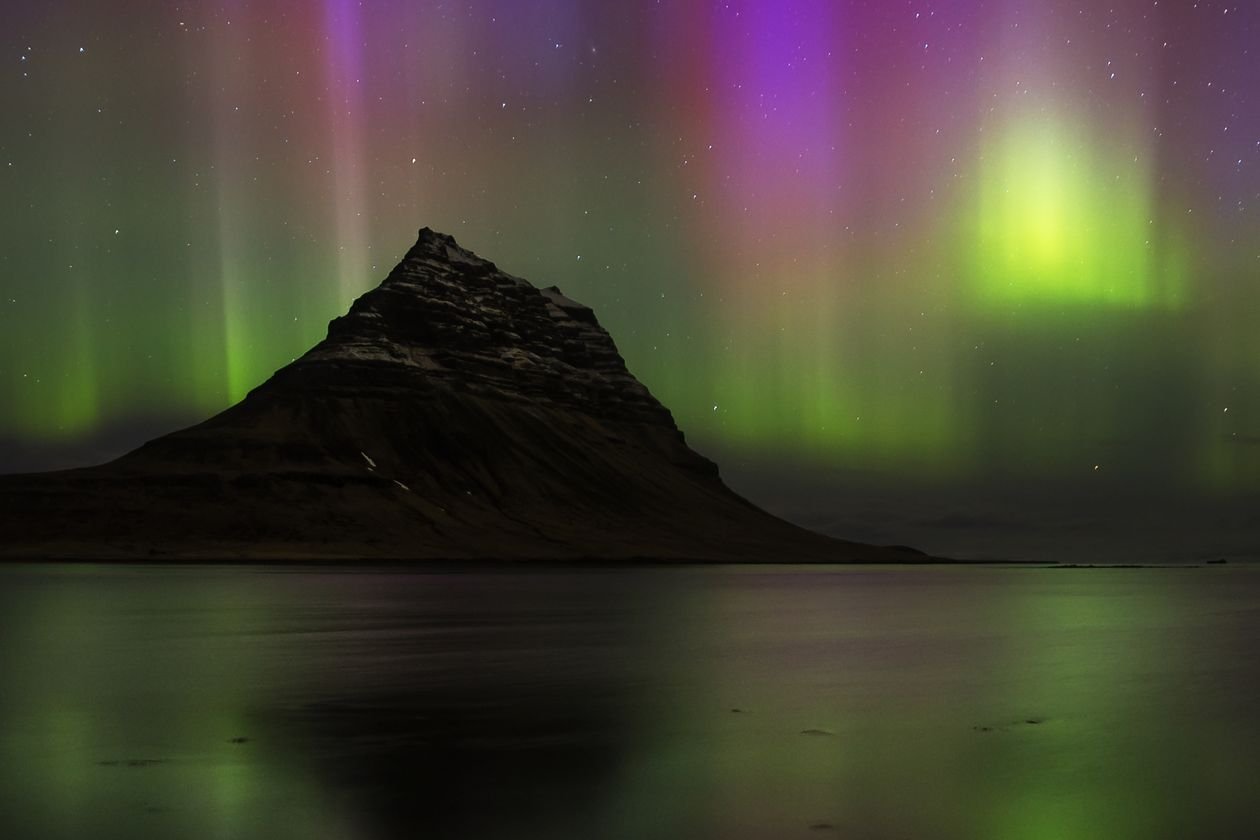
The famous church shaped mountain on the Snæfellsnes peninsula is Iceland’s most photographed mountain, and it is even better under the aurora. The nearby waterfall gives you the classic composition. About two and a half hours from Reykjavik.
Akureyri and the north
North Iceland often has better weather than the south when storms roll in. Akureyri, the country’s second city, is a good base with easy access to dark countryside in every direction. If the south coast is clouded out, the north is sometimes clear, and vice versa. Check the cloud forecast before committing to a side of the island.
Anywhere dark will do
Honestly, once you are twenty minutes outside any town, on a clear dark night during high solar activity, the lights can appear right above your hotel. Do not overthink the exact pin on the map. The forecast matters more than the location.
Reading the aurora forecast
The Icelandic Met Office publishes an aurora forecast every day, and it is the tool every local guide uses. It shows two things: the expected aurora activity on a scale of 0 to 9, and the cloud cover map.
Here is what most visitors get wrong: cloud cover matters more than the activity number. A night with activity level 2 and clear skies will show you the lights. A night with activity level 6 under full cloud cover will show you nothing. Always check the cloud map first.
A few more things that help:
- New moon is best. A bright full moon washes out fainter displays, though strong storms still show through.
- Be patient. The lights come in waves. A quiet sky at 10 pm can explode at midnight.
- Look north. In Iceland the aurora usually appears in the northern sky first.
- Dress for standing around. You will be outside, still, in the cold, for an hour or more. Thermal layers, a proper winter jacket, insulated boots, gloves, and a hat are not optional.
Guided tour or self drive?
Take a guided aurora tour if you are based in Reykjavik and do not want to drive dark rural roads in winter. The guides watch the forecasts all day and drive to wherever the sky is clearest, sometimes an hour or more from the city. Many operators also offer a free second attempt if the lights do not show, which takes the pressure off a single night.
Self drive if you are touring the country anyway and staying outside the city. You get flexibility and you can chase gaps in the clouds yourself. But do not drive tired on icy roads at 1 am. If you are exhausted, skip the night.
Photographing the northern lights
You do not need professional gear, but you need a tripod. Phone cameras on night mode can capture strong displays now, but anything serious needs:
- A tripod (non negotiable for long exposures)
- Manual mode: wide aperture, ISO 1600 to 3200, exposure 10 to 25 seconds
- A wide angle lens if you are using a real camera
- Spare batteries kept in a warm pocket. Cold drains them fast
And this matters more than settings: spend at least some of the time just watching. Photos are great, but the lights moving overhead in real time is the actual experience.
Where to stay
Reykjavik works as a base if you take guided tours each night. If you are self driving, split your nights between Reykjavik and the south coast (Vik or the area near the glacier lagoon) to cover more sky. Countryside guesthouses and farm stays put you under dark skies the moment you step outside, which means you can check for the lights without driving anywhere.
Frequently asked questions
What is the best month to see the northern lights in Iceland?
September, October, February, and March offer the best balance of dark nights and manageable weather. December and January have the most darkness but also the most storms.
Can you see the northern lights from Reykjavik?
Sometimes, during strong displays, but the city lights wash out anything faint. Drive at least 20 to 30 minutes out of the city for a real chance.
How many nights should I plan for?
A minimum of three to four nights dedicated to aurora hunting. Weather is the biggest variable, and extra nights are your insurance.
Do I need to book an aurora tour, or can I see them on my own?
You can see them on your own from any dark location. Tours are worth it because the guides chase clear skies using live forecasts, and many offer a free retry if the lights do not appear.
What should I wear?
Full winter gear: thermal base layers, an insulated jacket, waterproof outer layer, warm boots, gloves, and a hat. You will be standing still outside for a long time, which feels much colder than walking.
About the author: Admin is the editorial voice behind Landmarks Landscapes, writing practical guides to the world’s great landmarks and natural landscapes.